Kamakura, a town steeped in history near Tokyo, is famous for the Great Buddha (Daibutsu) or the Tsurugaoka Hachimangu Shrine. It also enjoys popularity in the rainy season because there are many viewing spots for hydrangeas. Having said that, Kamakura can be enjoyed throughout the year: cherry blossoms in spring, beautiful sea and mountains for hiking in summer, overwhelmingly beautiful foliage in autumn, and the gorgeous still sea with a view of Mt. Fuji on clear, crisp days in winter. Dotted with temples, shrines, and stores selling traditional wares, there is something for everyone in Kamakura.

Timing is everything when it comes to autumn foliage, and even though we visited at the beginning of autumn, the leaves hadn’t changed color drastically. Anyway, in this feature, we introduce some spots to enjoy the seasonal change in Kamakura, Kanagawa prefecture.
Cafe Kaeru

An organic café with a garden where you can feel the atmosphere of Kamakura and experience each of the four seasons. The menu is full of dishes made with seasonal, organic produce. Look at how fresh and delicious these vegetables are! You can enjoy a cup of coffee and some desserts too.

Details
Business hours: 11:00-17:00 (last entry 16:30) Closed on Wednesdays and Thursdays
Google Map
Official Instagram
Hokokuji (報国寺)

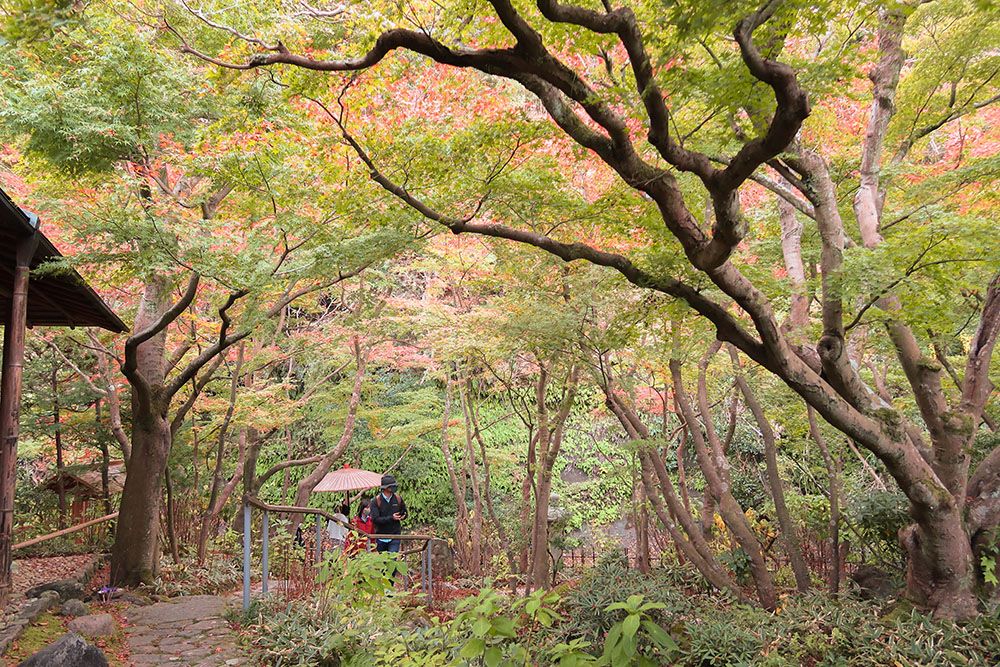
Hokokuji Temple is a Rinzai sect Buddhist temple in Kamakura, and was built by Tengan Eko in 1334 (the first year of the Kenmu Era). Although enjoyable in all seasons, the Japanese-style garden inside the temple looks particularly beautiful against a backdrop of red maple leaves.


Most famous for its bamboo forest, there are about 1,000 bamboo trees here. You can walk through the path carved between these tall bamboos and you’ll barely be able to see the sky through the dense foliage. The sunlight filtering through the grove creates a soft, shimmering light. One of the most serene spots in Kamakura, the gardens are decorated with ancient artifacts, making one feel like they are in ancient Japan.

After paying your respects and admiring the nature within this temple, you can enjoy a cup of green tea with the view of the forest. Make sure to buy a drink ticket at the entrance.
Details
Opening hours: 9:00-16:00
Entry fee: 400 yen
Green tea (with Japanese sweets): 600 yen (last entry 15:30) *Green tea may be cancelled in case of large crowds. *May be closed in case of bad weather *No camera pods are allowed for photography
Google Map
Official website
Ichijo Ekan Sanso (一条恵観山荘)

Ichijo Ekan Sanso was built by Ichijo Ekan, 9th son of the Emperor Go-Yozei, the reigning nobility of the early Edo Period (17th century), who loved tea ceremonies and writing waka (Japanese poetry).
Originally built in Nishigamo, Kyoto Prefecture, it was a summer house of the Ichijo family in the mountains. At first glance, the building looks like an ordinary Japanese-style house in the countryside, but it was actually a royal “teahouse” designed by Ekan with a lot of ambition and was a stage for cultural activities in Kyoto.
It was deconstructed and moved to Kamakura in 1959. The rock gardens and other features were recreated in Kamakura, making it a spot where you can enjoy a little bit of Kyoto in Kamakura. In 1964, it was designated as an Important Cultural Property.

This is a must-visit if you’re coming to Japan in autumn. The Zen garden with autumn foliage makes for a phenomenal photo!

Within the park, there are many spots for viewing autumn leaves. Since it is located next to a river, you can listen to the soothing water. There is also a café where you can enjoy a cup of green tea.
Details
Opening hours: 10:00-16:00 (last entry 15:30)
Entry fee: 700 yen (Note: Prices are subject to change in each season)
Cafe Yamamomotei (かふぇ楊梅亭): 10:00-17:00 (last entry 16:30)
Building entry fee: 1,500 yen (Reservations required)
Japanese sweet making experience: 5,000 yen (Entrance fee included, Reservations required)
Google Map
Official Website
Jomyoji (浄妙寺)

Jomyoji (temple) was built in 1188 by Yoshikane Ashikaga, a feudal lord in the late Heian and early Kamakura period.
Spread over a wide area, you can stroll through the temple precincts while enjoying the autumn foliage. The uniquely curved, copper roof of the main hall is quite stunning.

Unlike all other Japanese-style buildings in Jomyoji, Ishigama Garden Terrace is a restaurant in a renovated 90-year-old European-style building. There is an English-style garden in front of the restaurant.

They serve dishes made with local vegetables in Kamakura and homemade bread freshly out of their stone oven. You can also savor desserts, a cup of coffee in a large balcony with views of the natural surroundings.

Details
Jomyoji (浄妙寺)
Opening hours: 9:00-16:30
Entry fee: 100 yen
Google Map
Ishigama Garden Terrace (石窯ガーデンテラス)
Opening hours: 10:00-17:00 (last entry 16:00) Closed on Monday
Google Map
Official website
Hasedera (長谷寺)

Even though Hasedera is most popular for its hydrangeas in summer, it is no less beautiful during the autumn light-up of the gardens with lots of maple trees.

The garden area is lit up, so you can see the temple in a different atmosphere than the lush green of summer.

Since we visited a little earlier than the peak autumn colors, you can’t see how stunning this temple gets in early December.

The zen garden in the Karesansui style (landscape created by rocks and sand) is also very beautiful. The jizo (guardian statues) around the temple are extremely cute.

The temple buildings with a history of about 1,300 years are specially illuminated in blue. A digital light show will take place every ten minutes during the light-up period.
Details
Hasedera (長谷寺)
Entry fee: Adults 400 yen, Elementary school students 200 yen
Light-up starts after sunset (around 16:30), gates to the temple close at 18:30, while to the mountain at 19:00 Light-up period: Nov 1-Dec 20 *The peak autumn colors are from late November to mid-December.

Although this year, many of you may have had to cancel your travel plans for Japan, make a note of these spots for the coming years!
The Final Splash of Color
Kamakura truly shines in the autumn, offering a quieter, more reflective beauty than its busy spring season. From the soothing bamboo grove of Hokokuji to the dramatic evening light-up at Hasedera, these historic temples provide the perfect setting for enjoying Japan’s colorful foliage. Make note of these unique spots to experience the true blend of ancient Zen architecture and natural splendor on your next trip to Japan.