
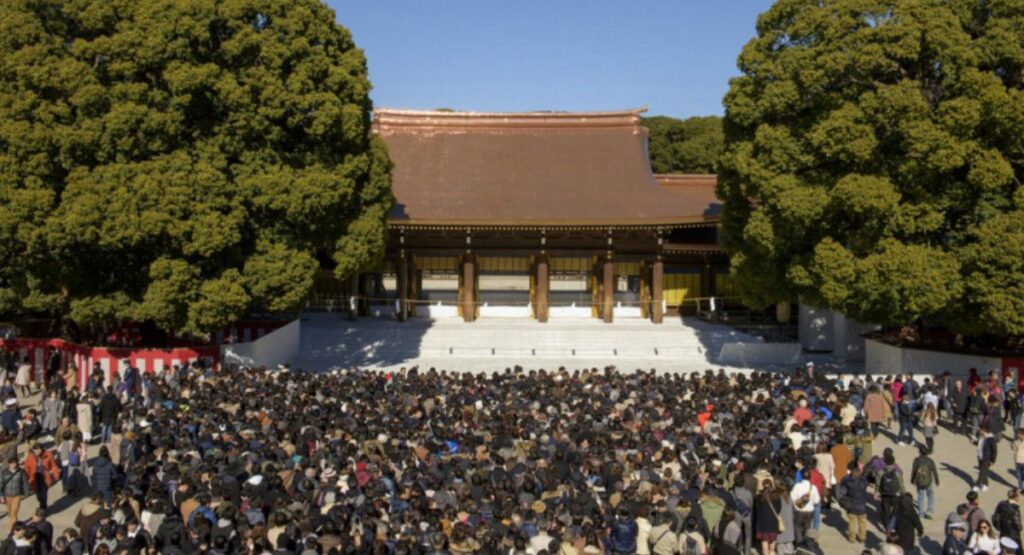
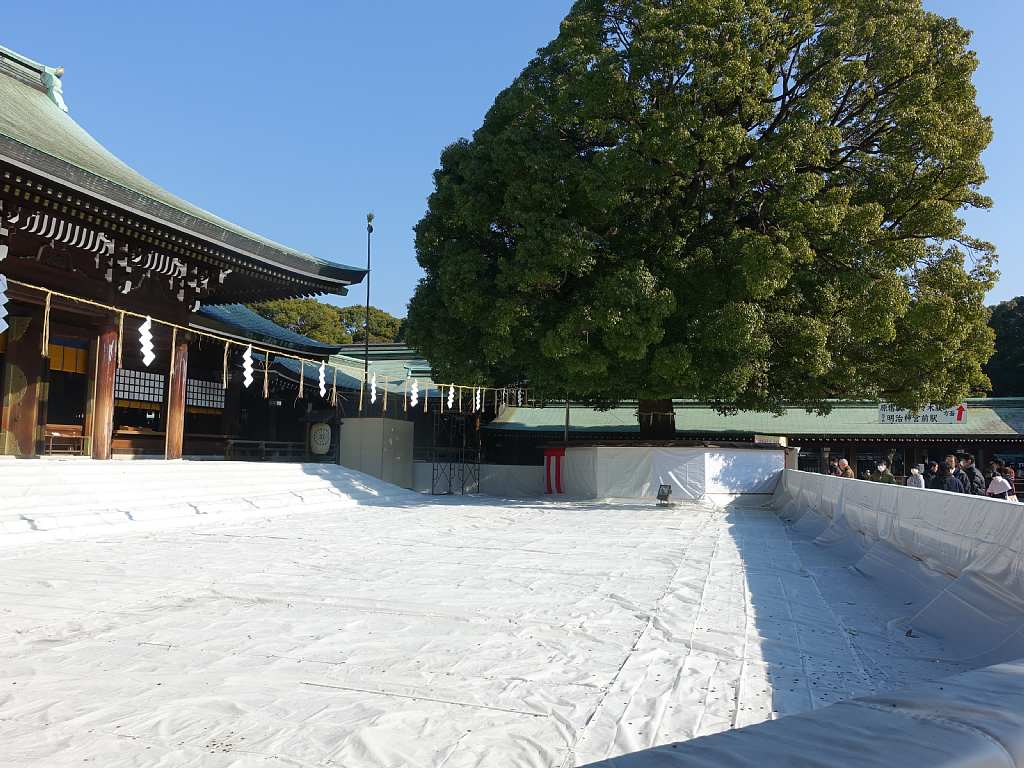
The Meiji Shrine (Meiji Jingu) in Harajuku, Tokyo, is one of the most popular shrines in Japan. Attracting over 10 million visitors each year, around 3 million of them head to the shrine for hatsumōde (new year’s prayer) during the first few days of the year, usually from January 1 to 3. Within this period, you will see a long queue stretching from the Torii (shrine’s gate) to the main hall, and usually it takes several hours to reach the main hall. Also, since the offertory box (sansenbako) is too small to accommodate the amount of money thrown by the visitors, the shrine has to cover the ground with white cloth and surround it with fences as a substitute.
Today, we estimate the potential amount of money earned by Meiji Shrine during the first few days of the year—think of it as a fun, back-of-the-envelope calculation!
How much money Meiji Shrine earned from January 1 to 3?
The exact amount of money earned by Meiji Shrine from January 1 to 3 is not disclosed, but we can roughly predict the total amount earned within this period based on typical visitor behavior. Usually, around 3.18 million visitors come to the shrine within this period.
Assuming each person throws:
1 yen: 3.18 million yen
5 yen: 15.9 million yen
10 yen: 31.8 million yen
100 yen: 318 million yen
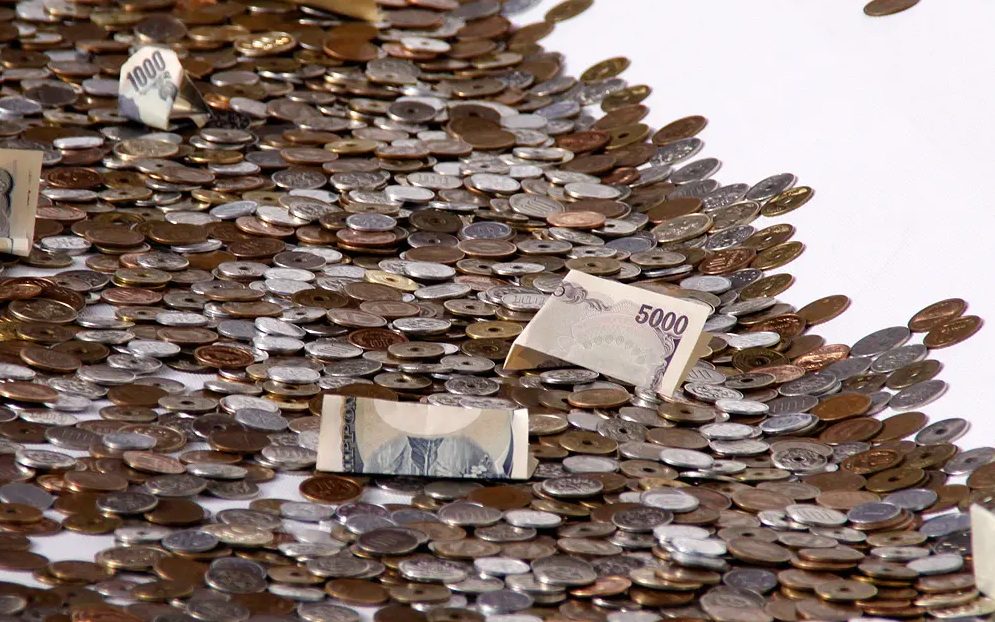
Of course, there are some people who threw 500 yen coins, or even larger amounts of money, so it is entirely possible for the shrine to earn well over 300 million yen within this period.
The True Cost of Tradition (A Fun Estimate)
The calculations reveal the staggering financial and logistical scale of the hatsumōde ritual. Meiji Shrine’s need to replace the offertory box with large, temporary fences to accommodate millions of visitors and hundreds of millions of yen in offerings underscores its status as Japan’s premier spiritual site. While this figure is purely a prediction, witnessing this annual event provides a profound insight into the enduring faith and cultural dedication of the Japanese people.