
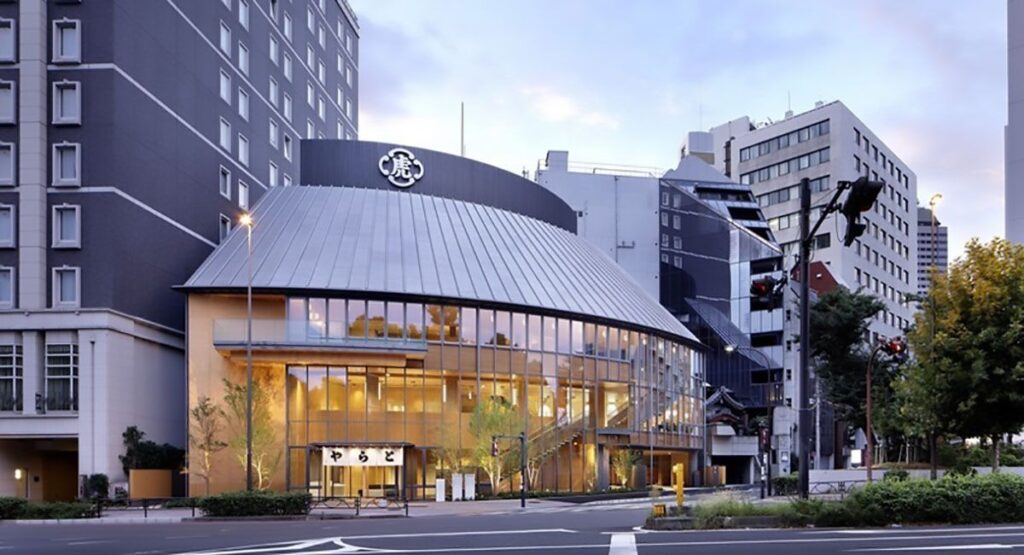
Toraya is a well-known name even among foreigners in Japan. From its iconic logo to the delicate yet delicious wagashi (Japanese sweets), everything about Toraya screams Japan.

The store first began business in 1879. The flagship store in Akasaka is a modern architectural marvel, and even if you don’t have a sweet tooth, the building itself is an inspired structure. Designed by renowned architect Hiroshi Naito, you can spend a relaxed time here enjoying the intricate features of Japanese architecture.

Design and Aesthetics
Hinoki (Japanese cypress) has been used for the interior as well as the exterior, with a black-lacquered wall that uses an ancient technique of plastering called shikkui. Large windows using glass light up the fluid, curving staircase. Each floor weaves into the next without abruptions.

As you walk around this building, you are instantly enveloped in warmth and the intoxicating aroma of Japanese cypress.
Exhibits and Dining
On the basement floor is an exhibition space where you can see exhibits that change over time. When we visited, there was an illustration featuring the history of Toraya.

On the second floor, you can buy a variety of freshly-made sweets.

On the third floor is the gorgeous cafe facing the Akasaka Palace grounds offering a beautiful sight of green.

During lunch (11:30-14:30), you can order from a variety of seasonal set menus. The price ranges from 1300-1800 yen, which is quite amazing and affordable for the quality.

Seasonal sweets are available all through the day. These change every three weeks. We tried this cute-looking Wakaba Kage in late summer. You can also enjoy seats outdoors on the balcony.

The following are some of the autumn sweets!


A Must-Visit for Design and Dessert
Are you convinced to visit this sweets store and café? Even if you don’t get a chance to visit the flagship store, you can find plenty of branches of Toraya, including one right inside the stunning Tokyo Station brick building. Toraya Akasaka is the perfect place to appreciate high-level Japanese craftsmanship, both in architecture and in the delicious, delicate art of wagashi.