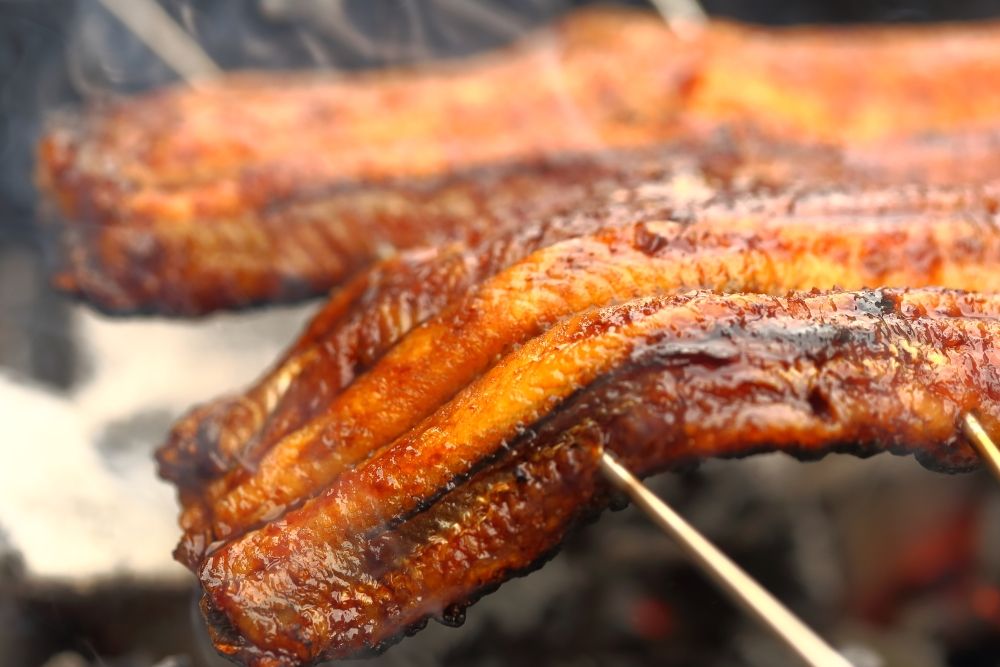
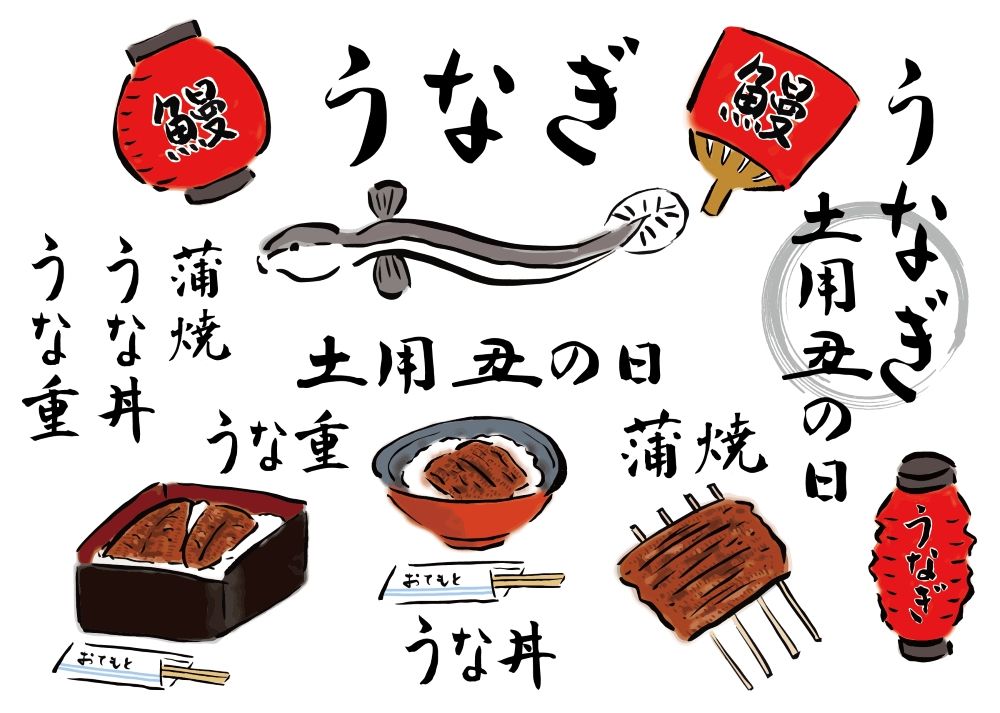
What is Doyo no Ushi no Hi?
Ushi (丑) refers to the Ox zodiac sign, and Ushi no Hi literally means “Day of the Ox.” Doyo (土用) is the 18-19 day period preceding the change of seasons. While this occurs four times a year, the summer “Day of the Ox” is the most famous, falling during the hottest part of July or August.
This doyo period does not only fall in summer but also in spring (Risshun) around February 4, in summer (Rikka) around May 5, in fall (Risshu) around August 4 and in winter (Ritto) around November 7.
Why is eel eaten on this day?

In the Edo period, it was believed that eating food beginning with the character “U” (う) on this day would provide relief from the summer heat. Legend says the scholar Hiraga Gennai helped a struggling eel restaurant by creating a sign that said, “Today is the Day of the Ox—the best day to eat Unagi.” The tradition stuck because unagi is incredibly nutritious—packed with protein, Vitamin A, and B-vitamins to help fight “summer fatigue” (natsubate).
Is anago the same as unagi?
Unagi is actually a deep-sea fish, but in the breeding season, unagi migrate to fresh water bodies, and anago migrates to shallow sea waters near the land. Unagi is known for its bold flavor while anago is mild. Unagi (freshwater eel)

Anago (saltwater eel)

Let’s check out the main types of eel dishes found in Japan.
Unaju
Unaju is the most iconic eel dish. Grilled eel is glazed with tare (sweet soy sauce), sprinkled with sansho (Japanese pepper), and served over rice in a lacquered box.

Unagi Musashino (Saitama): Located in Urawa, the birthplace of the Kabayaki method. In 2026, it remains a destination for connoisseurs seeking eel grilled over premium Binchotan charcoal.

Seifurou (Odawara): Founded in 1862 near Odawara Castle, this restaurant is now run by the fifth generation. They are famous for their Kyosui Eel, which is steamed and grilled to perfection.

Hitsumabushi
In this style, the eel is slit along the belly and grilled without steaming, resulting in a crispier skin. It is served in a wooden tub and enjoyed in three different ways (plain, with condiments, and finally as a dashi-broth soup).

Atsuta Horaiken (Nagoya): The “original” home of Hitsumabushi. In 2026, their secret sauce—used for over 140 years—is still considered the gold standard.

Sumiyaki Unafuji (Nagoya/Tokyo): Consistently one of the highest-rated eel spots in Japan. In 2026, they have opened more accessible locations, including one in Tokyo, so you can experience their fatty, charcoal-grilled eel without the trip to Nagoya.

Maruya (Nagoya): Known for using the freshest domestic eels and a 160-year-old secret sauce that provides a magnificent, deep flavor.