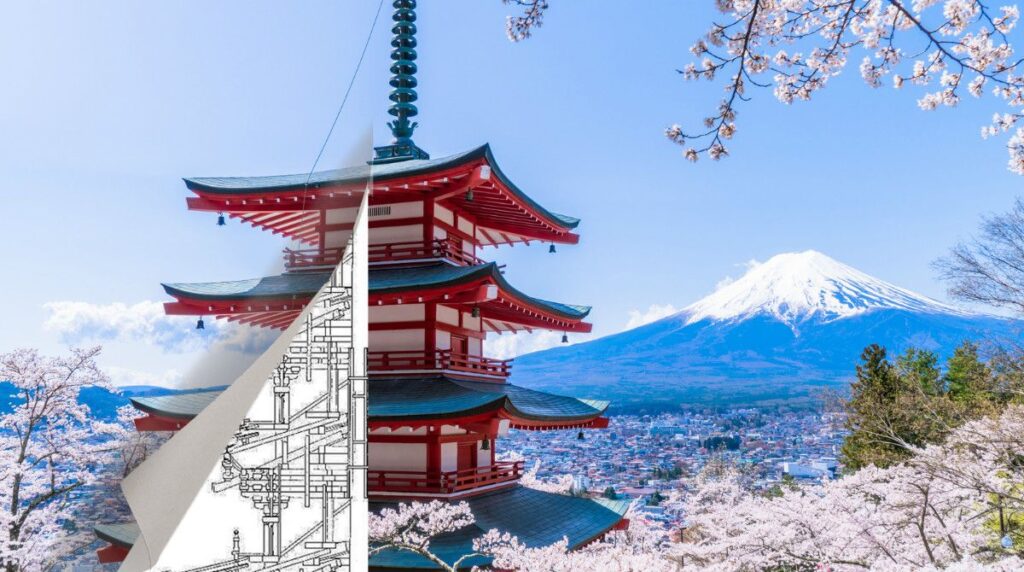
Whether you are admiring the pagoda at Senso-ji Temple in Tokyo or the one framed by Mount Fuji at Chureito Pagoda, these structures are among Japan’s most photographed landmarks. However, for many visitors, there’s a mystery remains: How do these tall, wooden structures withstand Japan’s frequent earthquakes for centuries without collapsing?
The answer lies in an architectural masterpiece that bridges ancient wisdom with modern engineering.
The Origin and Symbolism of the Pagoda
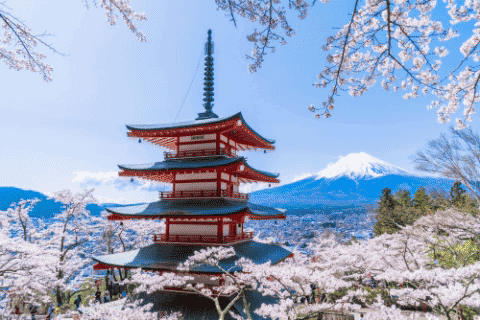
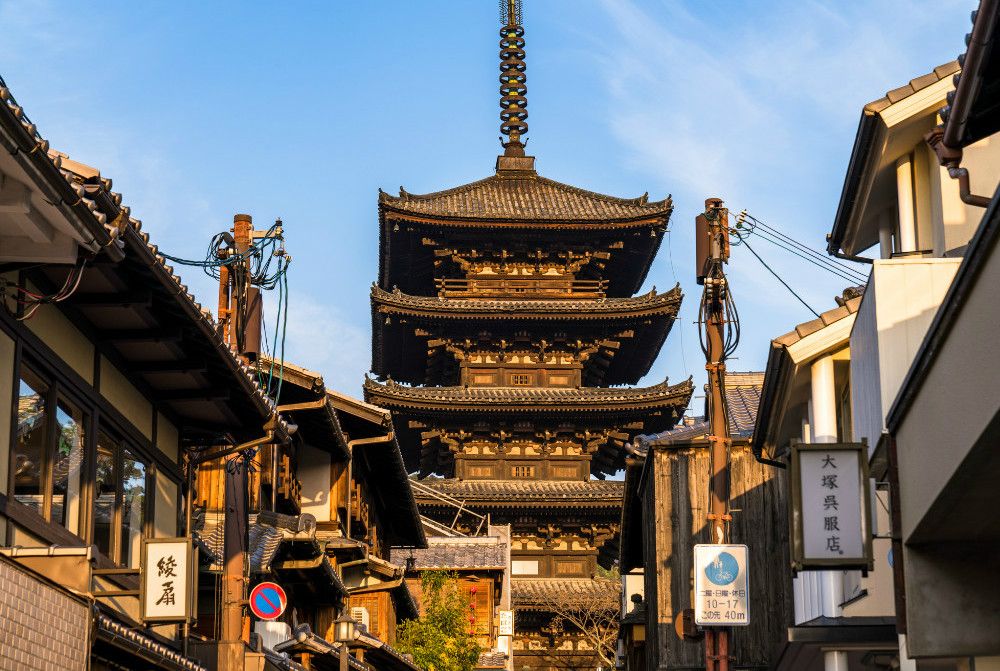
It is important to remember that a Japanese pagoda is a place of worship, not a building meant to be climbed. Derived from the Indian stupa, these towers were built to house the remains or relics of Buddhist priests. The five distinct layers represent the five elements of Buddhist cosmology: earth, water, fire, wind, and air.
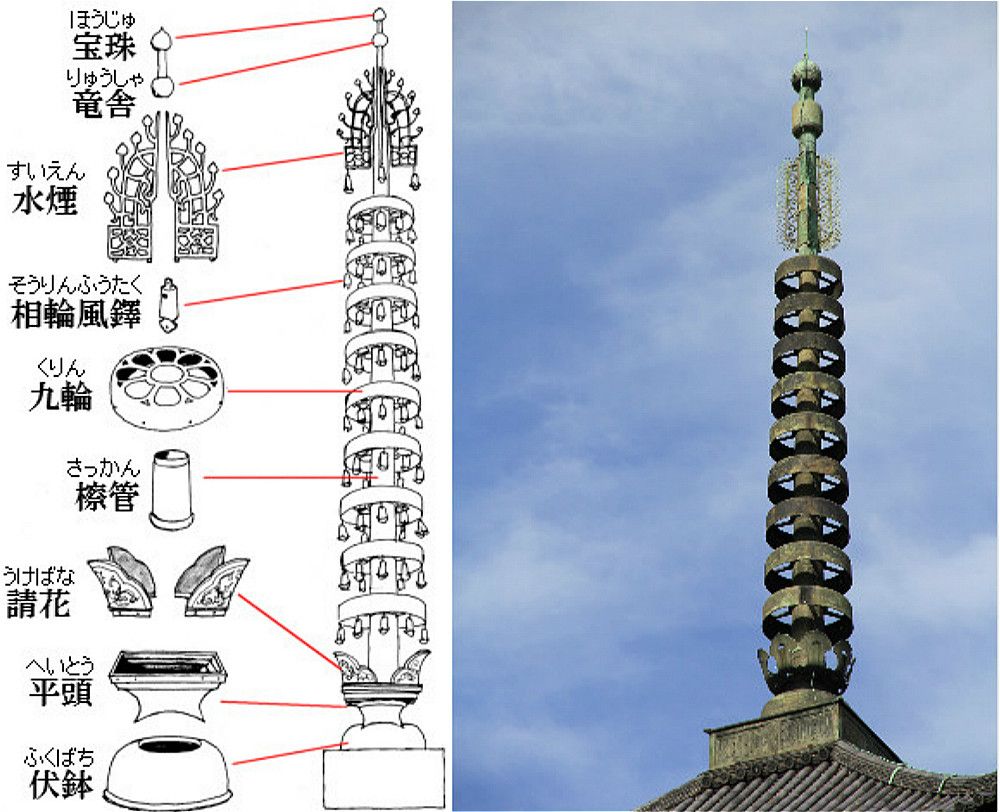
Because they are not meant for human occupancy, most pagodas are built without windows or internal staircases. The vertical spire at the top, called the sorin, also carries deep religious significance, representing a connection between the earth and the heavens.
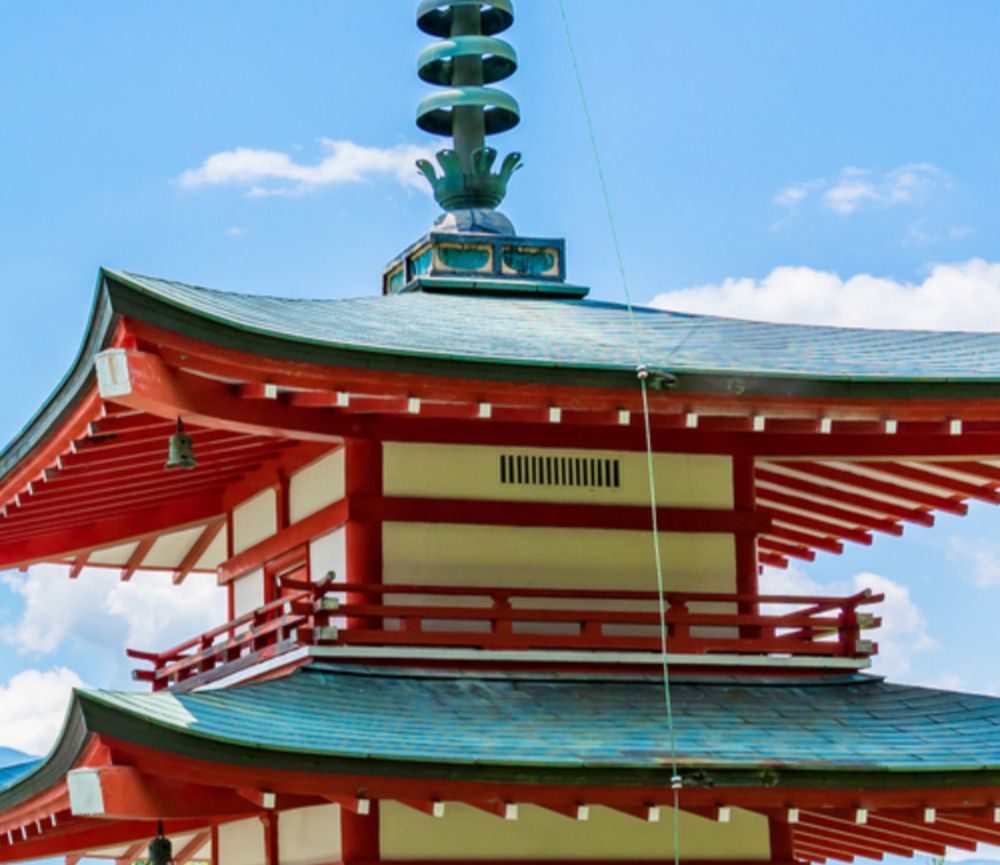
Architectural secret of the five-storied pagoda
As is known to all, Japan is an earthquake-prone country, but since ancient times, there has never been a record of the collapse of the five-storied tower due to an earthquake. How incredible! How can the seemingly weak wooden towers have such a strong anti-seismic function? All the secrets are actually hidden in its internal architectural design.
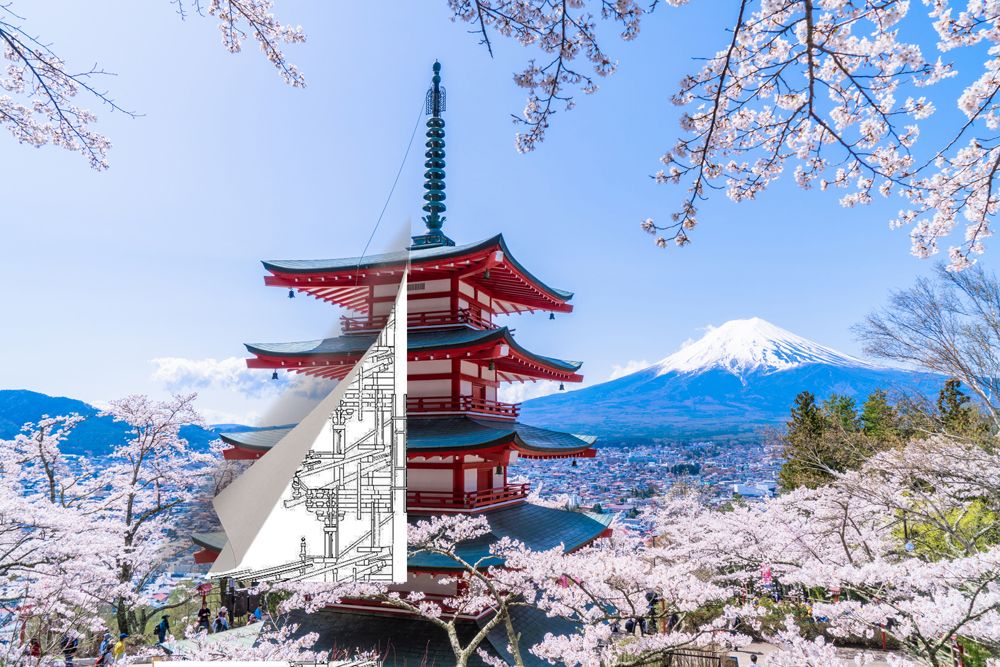
As we have seen from the outside, the five-storied pagoda is made up of five layers like overlapping blocks. But the inside is hollow, there are no stairs but only a central column or pillar that runs from the top to bottom called Shinbashira (心柱, lit. heart pillar). Each of the four layers have no point of contact with this core pillar except where it is supported at the sorin (finial).
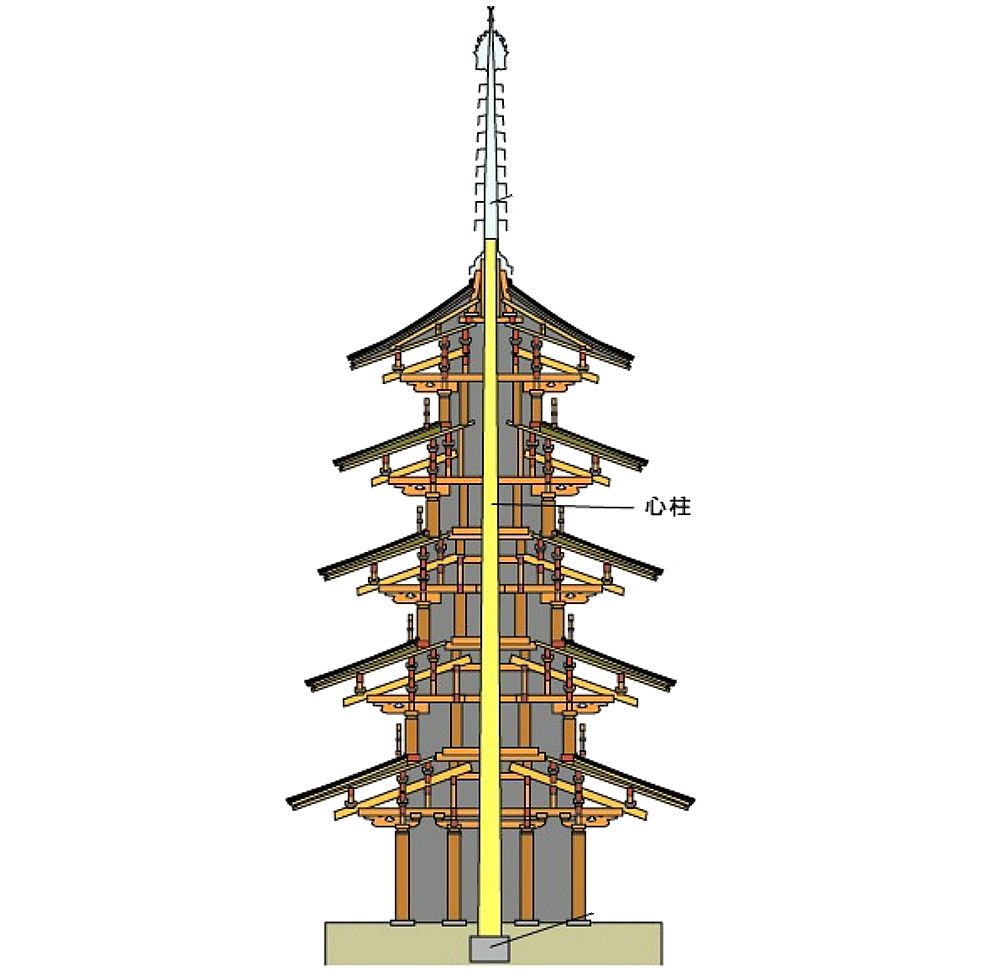
This design makes the pagoda in its entirety resistant to shaking in the event of an earthquake.
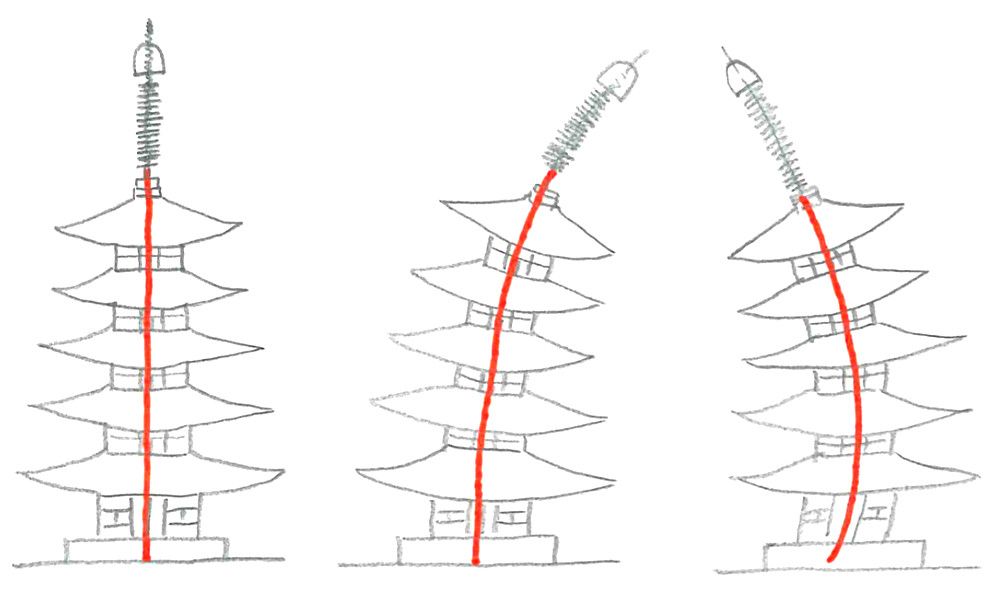
It has also been applied to many architectural designs in Japan. The most famous example is the world’s tallest tower, the Tokyo SkyTree, which is known to be built based on the “Shinbashira” design principle of the five-storied pagoda.
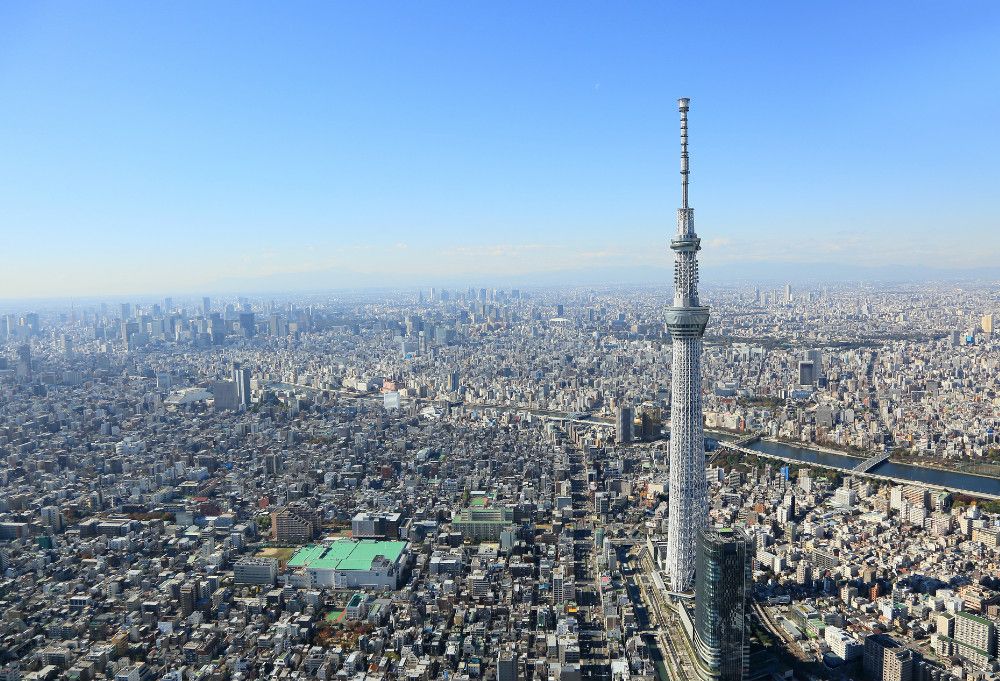
If you get the opportunity to visit the Tokyo Skytree, make sure to take a closer look. Like the pagoda, there is a central pillar not directly connected to the tower so that it cancels out swaying during an earthquake.
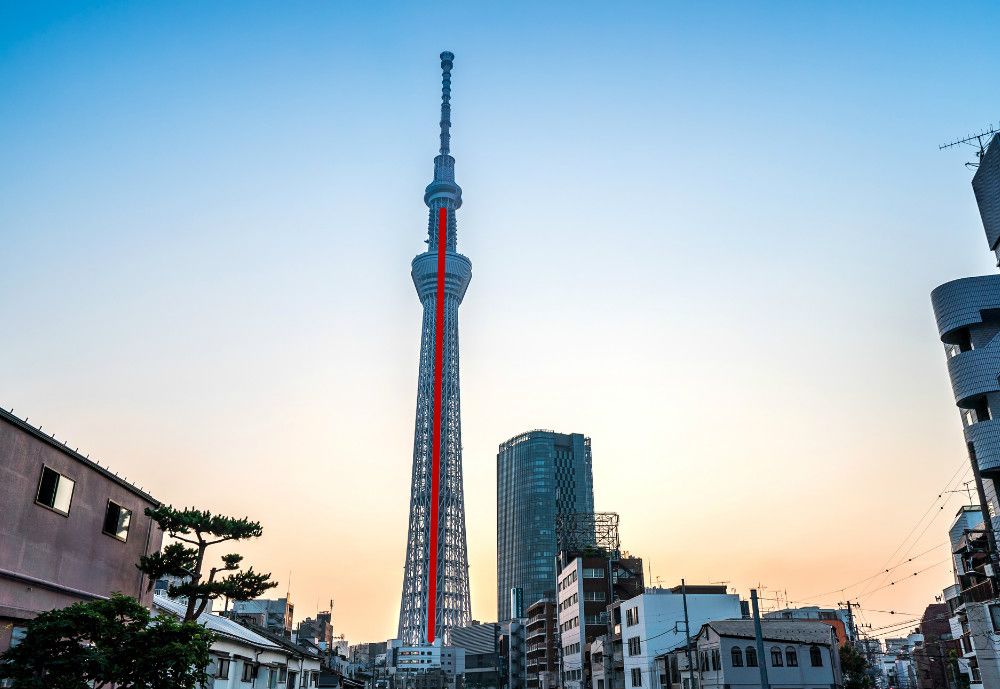
An enlarged view of the central pillar.
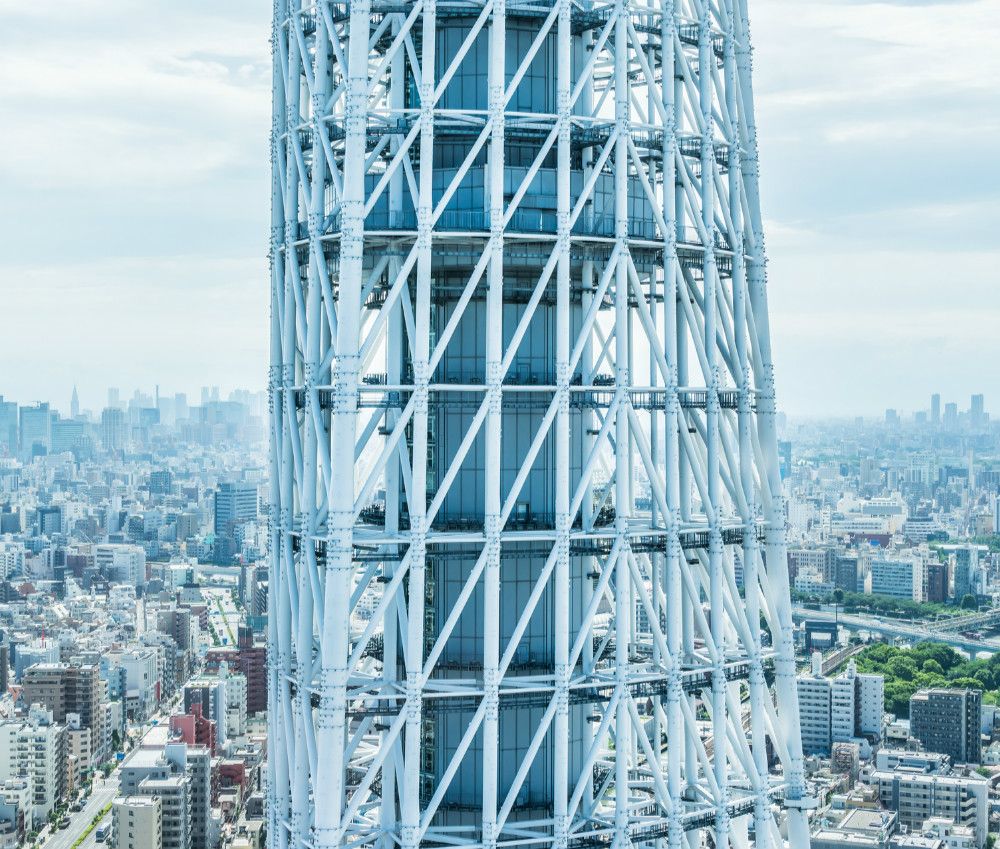
Compare a five-storied pagoda with the Tokyo Skytree and you realize it is nothing but a simplified and taller pagoda.
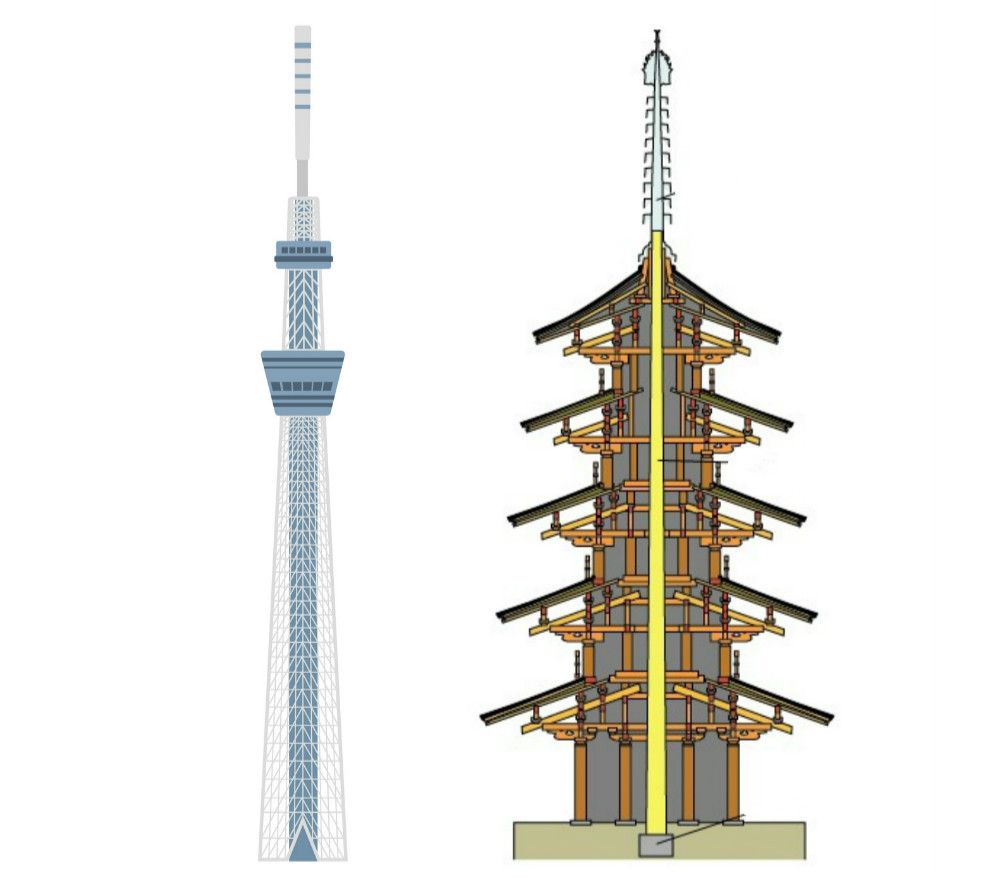
When you look at the Tokyo Skytree, you can’t help but be in awe of the Japanese ability to blend the traditional and modern.
A Blend of Tradition and Innovation
Looking at a five-storied pagoda in 2026 is a reminder that Japanese innovation has always been rooted in a deep respect for nature. By understanding how to move with the earth rather than fighting against it, ancient architects created a blueprint that still keeps the tall buildings safe today.