Japanese umbrellas, or Wagasa, have fascinated photographers and artists for centuries. An album of Japan feels incomplete without the exquisite elegance of these paper masterpieces.

Earliest records of the Japanese umbrella date back to the Heian period (794–1185). While designs vary by region, the basic structure remains rooted in tradition. For instance, the Kanazawa umbrella is known for its incredible sturdiness—a necessity for the heavy rainfall and snow of the Hokuriku region—compared to its more delicate Kyoto or Edo counterparts.

What makes the wagasa so special?
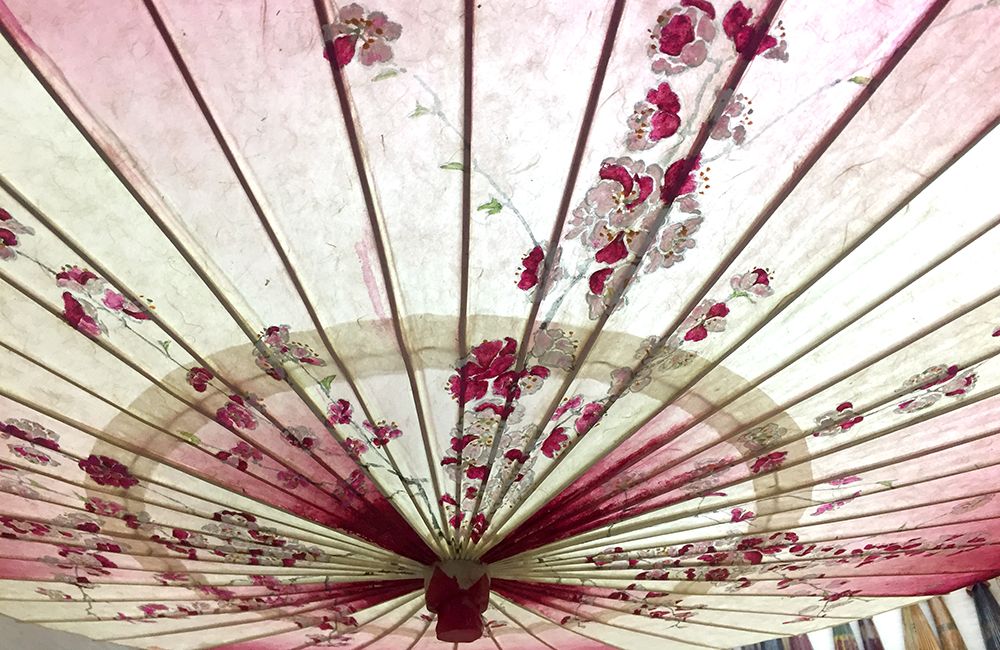
The patience and effort required to craft a perfect umbrella are evident in every detail. Wagasa production is a testament to the Japanese dedication to precision; it typically takes one to three months to complete a single piece.

The handmade washi (paper) for the umbrella comes from Toyama or Gifu for the Kanazawa umbrella but it can vary. The more durable the paper, the more expensive the cost of the umbrella. Before sticking the washi (handmade paper) onto the umbrella frame, small patches of washi are tested for durability by applying lacquer and linseed oil.

Once the washi is stuck onto the umbrella frame using glue made from tapioca, lacquer is applied to the paper and then it is coated with linseed oil to make it waterproof. That is the key reason as to why Japanese paper umbrellas can be used in rain, snow or sunshine.

According to Matsuda san, owner of Matsuda Kasa in Kanazawa, the design does not affect the cost but the materials do.
Structure

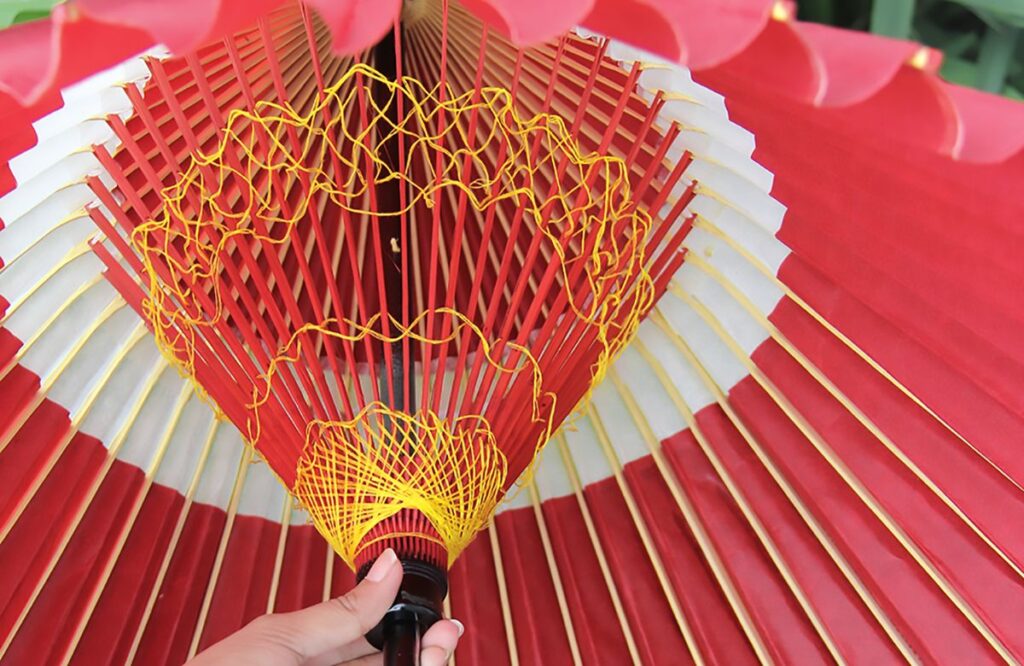
The umbrella photographed here has 44 oya hone (skeleton ribs or main frame).

The sho hone (supporting or lower ribs) are painted red and have a tiny spilt where they connect to the main skeleton ribs. Can you imagine the precision required to make this frame?

Kagari ito (decorative string) come in various colors and the stark contrast with red only adds to the elegance.

In the umbrella above, all the threads are yellow. Each intertwined thread has to be the perfect length for the umbrella to open properly.
Each part of the umbrella has a name and function.
The part of the ribs sticking out painted with lacquer are called Nokizome.

The temoto rokuro is where the lower ribs meet the shaft, and is supposed to be the most difficult to make.

The zukami is a piece of paper covering the atama rokuro (the part where the skeleton ribs meet).

On closing the umbrella, it almost looks like a flower.

Considering all of these features, the cost of the umbrella is justified. You can buy a decent one starting from 10,000 yen but the more exclusive ones can cost up to 100,000 yen! If you ever see a wagasa in a Japanese garden, don’t forget to go up close and see the intricacies that make up these masterpieces.