When you visit Japan, you will definitely see or use a Suica Card. For those unfamiliar with travel in Japan, Suica is a rechargeable contactless smart card that can be used as a fare card on train lines/buses, as well as electronic money at convenience stores and other select shops in Japan.

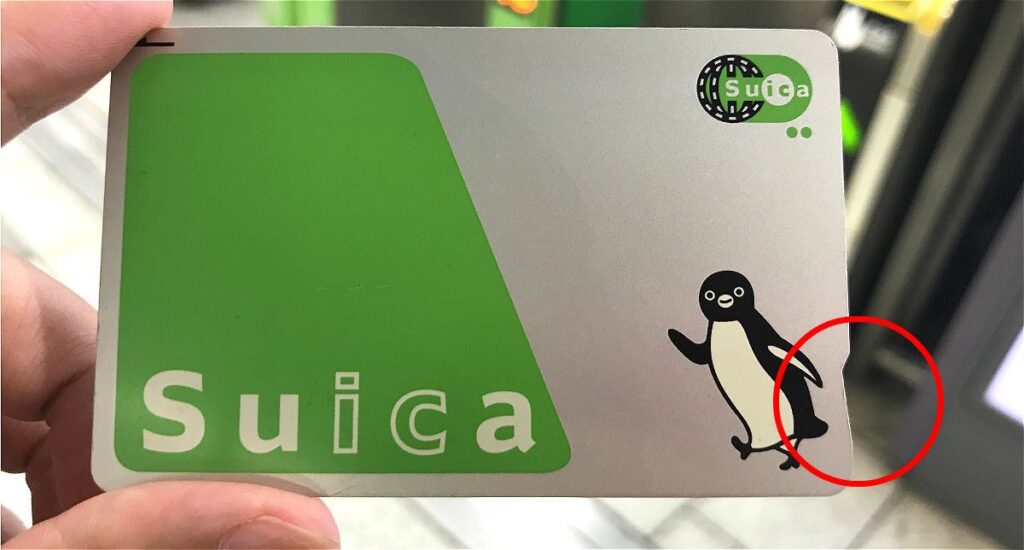
Those living in Japan or those who have visited Japan before, did you notice a small irregular cut on the side next to the penguin?
We checked the travel cards for trains and subways in other countries, and most seemed to be uniform on all sides without any notch or cut.

Accessibility for the Visually Impaired
So why does the Japanese Suica Card have this? It is a design element so that the visually challenged will know which side to insert in the automatic ticket machines. The user holds the notched side and inserts the opposite side. With this small identification system, the visually challenged seamlessly use the ticket machines for recharging their cards.

Having said that, not many countries cater to the visually or physically challenged, and barrier-free access is still rare. In addition to Japan, the United States also has this design, and we hope many more countries will add such designs and systems.

Tourist IC Cards (Welcome Suica)
In case you are visiting Japan, don’t miss out on buying one of these tourist-friendly cards (like the Welcome Suica) that often feature special designs like cherry blossoms. These tourist cards typically do not require a deposit but usually have a limited validity (e.g., 28 days) and cannot be refunded.

Thoughtful Design
The small notch on the Suica card is a powerful example of Japan’s dedication to universal design. It shows how simple, thoughtful features can significantly enhance accessibility for all users.