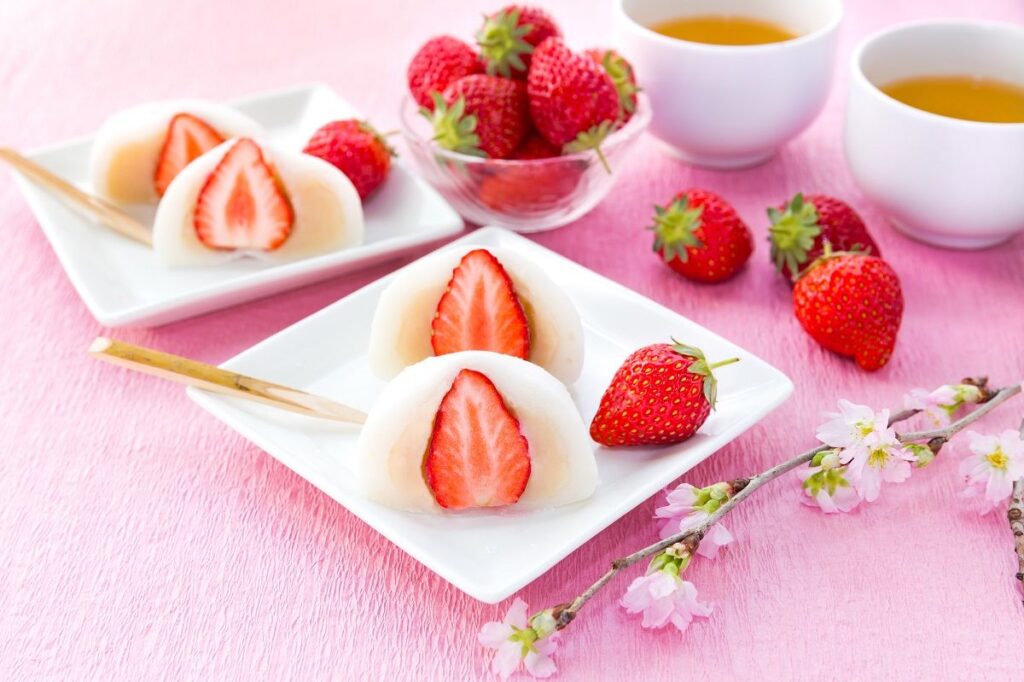
Mochi, a traditional Japanese rice cake made of sticky rice (mochigome), is a staple of Japanese cuisine, known for its soft, chewy texture. While it’s a beloved treat used in everything from wagashi (traditional sweets) to ice cream and soup, it also holds several fascinating—and sometimes dangerous—secrets. Today we will introduce five interesting “mysteries” and facts you should know about mochi.
Mochi can kill you

While it sounds strange, it is true that mochi can be lethal. Its extremely sticky and elastic texture makes it a choking hazard if not chewed thoroughly. Because mochi is a traditional New Year’s food, the Japanese government issues safety warnings every January.
Safety Tip: Authorities advise cutting mochi into small, bite-sized pieces and eating slowly. It’s also recommended to moisten your throat with tea or soup before taking a bite.
Mochi is not always eaten

Japanese families display Kagami Mochi inside their houses during New Year. Kagami mochi consists two pieces of round mochi; the smaller placed on top the larger, and a daidai (Japanese bitter orange). Displaying Kagami mochi is a part of ritual practices in Japan, and usually it’s displayed until January 11.
Mochi doesn’t expire easily

Although most people prefer to eat fresh mochi, it’s preservable. Mochi can last for several weeks if kept in the fridge, but if you want to enjoy a chewy, soft, and sticky mochi, we recommend eating it fresh.
Mochi and dango are two different things

Although they have similar textures, mochi and dango are two different things. Mochi is made of sticky rice flour, while dango is made of rice flour.
Mochi is rich in energy

Mochi is rich in energy since it’s made of sticky rice flour. It’s also considered as healthy since it’s gluten-free and cholesterol-free. Japanese farmers eat mochi in the winter to boost their stamina before work.
Mochi A Culinary Icon
Mochi remains an indispensable part of Japanese culture, perfectly blending ancient tradition with modern food trends (like the global “mochi donut” craze). Whether you’re enjoying a seasonal sakura mochi in the spring or a toasted isobe maki in the winter, this sticky treat is a window into the Japanese soul.