One of the most beautiful and unique dyeing forms in Japan is chusen (注染). It has been around since the Meiji Era (1868-1912) and is one of the most common methods to make tenugui (thin cotton hand towels). From cutting out a stencil by hand to applying the dye multiple times, each step in this amazing art form requires precision and care.
The Chusen Dyeing Process

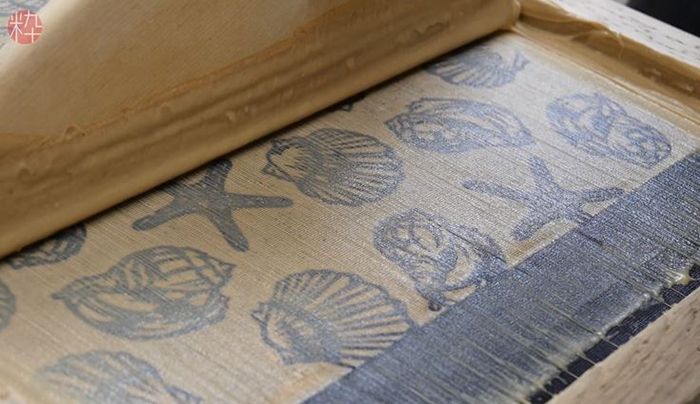
First you take a stencil that has a fine mesh making the paper stencil durable. Next a white cloth is placed on a bed and a screen with the stencil is placed over it. A starchy paste is used to imprint the pattern on the cloth, which is folded multiple times, repeating the process. The layered cloth is covered in sand to keep the print in place.

Finally, the dyeing begins.

Dyes are poured all over the cloth on both sides letting the dye seep through all the layers.

Once the dying is done, the cloth is vigorously washed till the starch is washed clean.

And finally, the cloth is hung out to dry!
Check out this video shot at Tenuri Kobo in Tokyo. You can participate in a workshop yourself!
Souvenirs and Workshops
The dyed cloth is used to make hand towels, umbrellas, accessory pouches, among other things that make for excellent souvenirs.

If you wish to participate in a workshop, do check the link below: https://souzou-kan.info/en/
A Perfect Souvenir
The chusen technique produces vibrant, detailed patterns that penetrate the fabric completely, making the designs visible on both sides—a mark of true craftsmanship. Participating in a workshop is a wonderful way to appreciate this unique Japanese tradition and create a meaningful souvenir.