Going to Japan for a trip? Some of you may be planning to shop till you drop, while some will visit places like Disneyland, Universal Studios, and others may dive into the historic glory of Japan.
If you’re one of those who loves Japan for its glorious history, then you must add this historic addition to the already long list of UNESCO World Heritage Sites in Japan: the Mozu-Furuichi Mounds. In July 2019, this site became Japan’s 23rd World Heritage Site, and significantly, Osaka’s first.
Osaka’s first UNESCO World Heritage Site
Up until the Mozu-Furuichi inclusion, each of the prefectures in the Kinki area of Japan (Kyoto, Osaka, Hyogo, Nara, Wakayama, and Mie) had already been home to UNESCO heritage sites, and Osaka was the notable exception.

Monuments of Ancient Kyoto: Kyoto Prefecture, Shiga Prefecture Himeji Castle: Hyogo Prefecture Sacred Sites and Pilgrimage Routes in the Kii Mountain Range: Nara Prefecture, Wakayama Prefecture, Mie Prefecture Horyuji Temple: Nara Prefecture Monuments of Ancient Nara: Nara Prefecture
The campaign to gain this recognition was a long one. In 2013, the Osaka Prefecture and the three local cities first proposed the inclusion of these ancient burial mounds in the Heritage List.

The Japanese government eventually listed the ancient tombs on the recommendation list in July 2017. UNESCO’s advisory body, the International Council of Cultural Monuments and Historical Places (ICOMOS), also gave recommendations to include these in the Heritage List, and finally, on July 6, 2019, UNESCO confirmed the inclusion of the ancient tombs in the World Heritage List. Osaka is now proudly represented on the Heritage List!
What is special about these burial mounds?
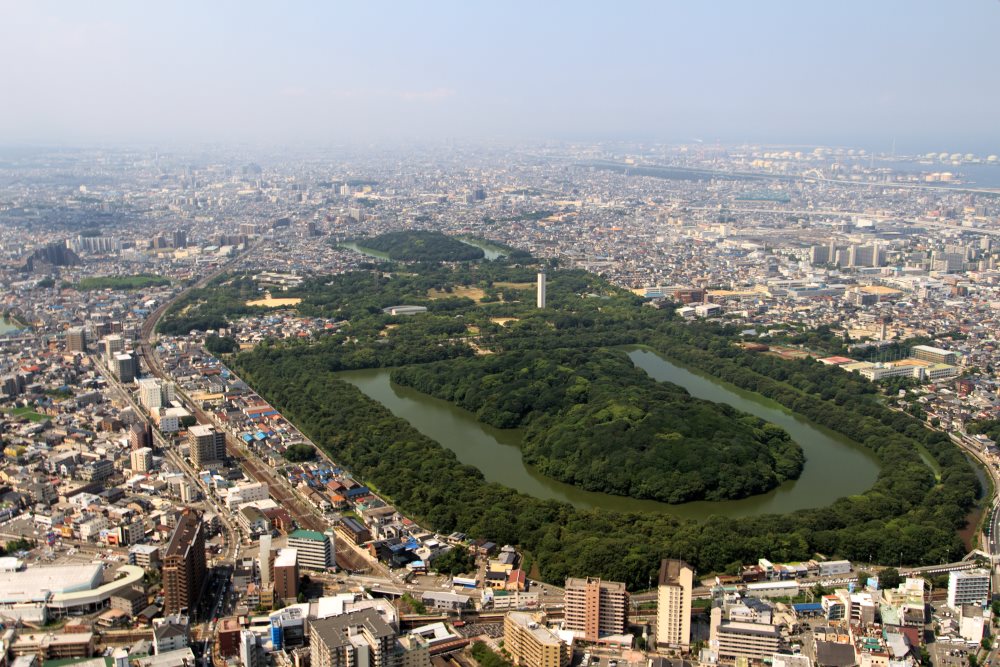
The Mozu tombs are in Sakai, and the Furuichi cluster are in nearby Habikino and Fujiidera, both in Osaka. There are 49 ancient tombs in this group. The period of construction was the age of Japanese burial mounds called the Kofun Period, from the second half of the 4th century to the second half of the 5th century.
Among the ancient tombs is Daisen Kofun, the tomb of Emperor Nintoku, which is 486 meters in length and nearly 36 meters high. It is also known as one of the “Three Great Graves of the World,” along with the Khufu Pyramid in Egypt and the Mausoleum of the First Qin Emperor in China.

The keyhole-shaped tombs were reserved for the emperors, the highest-ranking individuals at the time. This shape is unique to Japan, making it extremely significant.
In the past, various cultural relics were excavated from this area. Other than the biggest tomb, there are more than 10 small ancient tombs in the areas close by. The entire cluster of ancient tombs is considered to represent the grandeur of the ancient tomb buildings based on size, the number of ancient tombs, artifacts unearthed, and so on. According to the International Council on Monuments and Sites (ICOMOS), the ancient tombs can significantly provide insights into the burial culture as well as social and political structure of the ancient civilization.
A Growing Heritage List
Japan now has 26 World Heritage Sites: 21 cultural and 5 natural, with the Mozu-Furuichi Kofun Group securing its place as an irreplaceable link to the country’s imperial past. How many do you plan to visit on your trip to Japan?