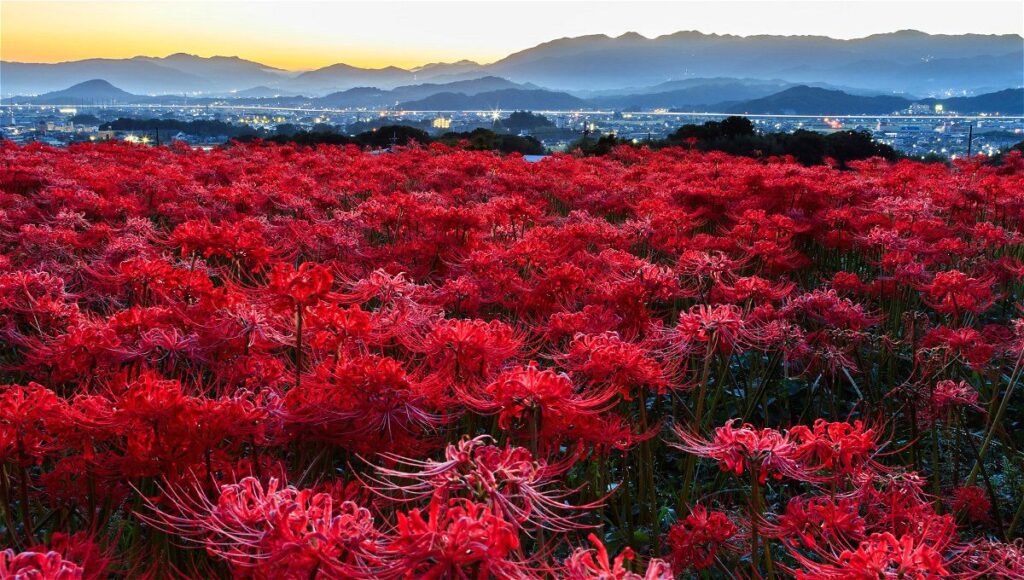
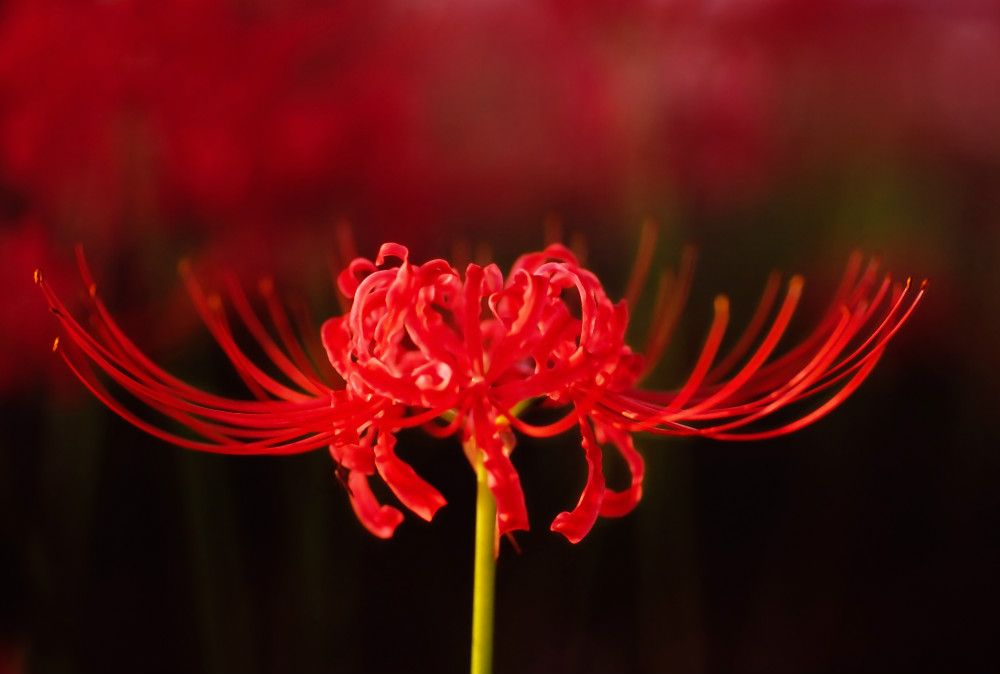
While many travelers visit Japan for the soft pinks of spring or the oranges of late autumn, September 2026 offers a more mystical sight: the fiery red of the Higanbana (Red Spider Lily).
Deeply tied to Japanese folklore and the Buddhist calendar, these flowers are more than just a beautiful backdrop—they are a cultural symbol of life, death, and transition.
The Legend of the “Death Flower”
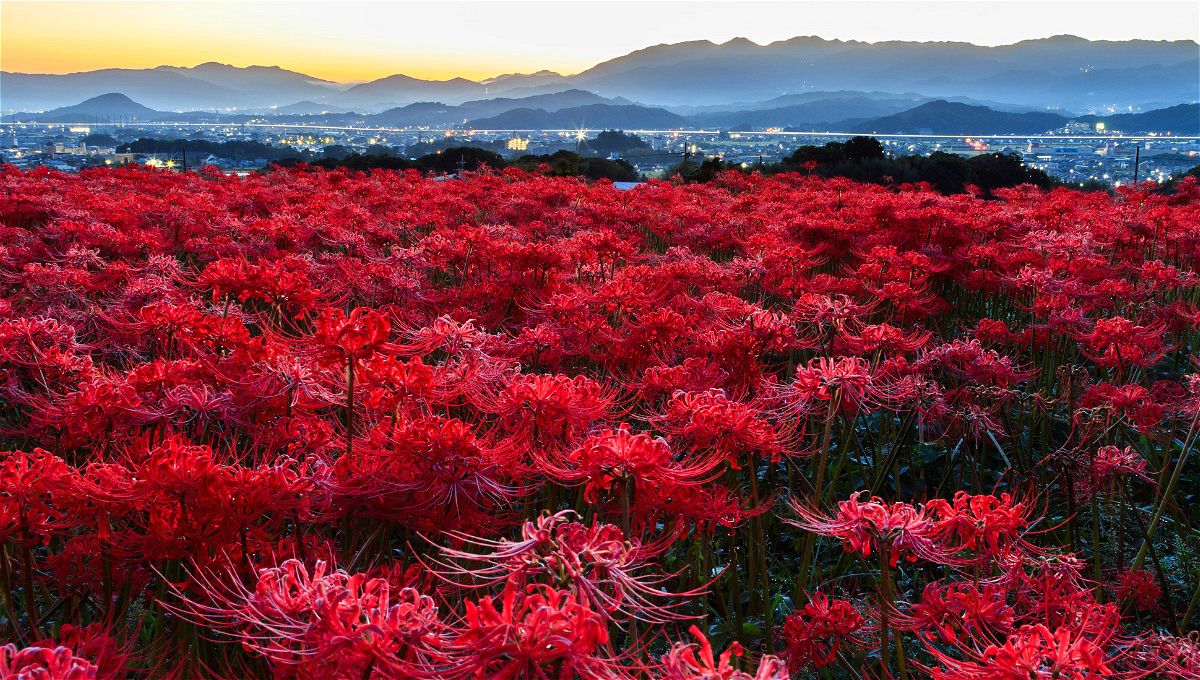
O-higan, day of the autumn equinox, is a national holiday in Japan (Sep 23). Higan literally translates to “other side/shore” meaning the land of the dead and O-higan is a day for families to visit their ancestor’s graves and pray for the souls of the departed. Higanbana is known as the “death flower” in China, Japan and Korea.
In the anime “Onmyoji,” you hear the character of Higanbana introduce itself as “I live on the other side of the Sanzu river where there is a sea of Higanbana. Painting the river red like a flame, a spectacular sight…but the only ones I see are the dead.”
A peculiarity of this flower is that the leaves and the flowers never see each other. The flowers bloom at the end of a long shaft and once the flowers wither, the shafts decay and you see the leaves sprout. This is why this flower is also considered a symbol of separation.

The Colors of the Equinox
In Japan, the higanbana is often seen in temple precincts or cemeteries, and the Japanese have the custom of sweeping graves in September. Some even consider this flower unlucky. However, in Japanese, the flower is also referred to as “manjushage” which in Buddhism means “flower of the heavens,” implying that red flowers fall from the heavens signalling a celebratory event. Japanese is known to have connotations and meanings associated with flowers. The red spider lily implies: Never to meet again/Lost memory/Abandonment.

You can also see the white and yellow variety of the Higanbana. The white spider lily implies loneliness and the anticipation of meeting someone again.

The yellow spider lily implies reminiscence and feelings of love.

September is when the seasons change from summer to autumn in Japan and watching the Higanbana dancing along rice paddies is a popular activity. Want to see these gorgeous flowers?

Timing the Bloom
Because of the “Hot-umn” trend (warmer Septembers), the peak bloom in 2026 is expected to be slightly later than usual—likely between September 20th and early October.