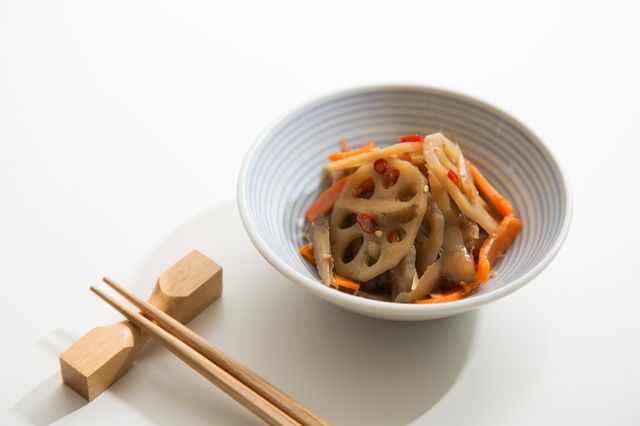
Did you ever get confused at a Japanese restaurant when the staff kept a small bowl of food even before you’ve ordered? It could be anything like radish pickles, tofu with grated ginger, or even a mini salad—something the size of an appetizer, and it varies at different restaurants. Many foreigners are surprised by this, but it is a quintessential aspect of eating at Japanese restaurants, especially at izakaya (Japanese-style pubs).
Table of Contents
ToggleMeaning of Otoshi (お通し)
Otoshi is also called Tsukidashi (突き出し), which literally means “pushed out,” in the Kansai region, since it can be served immediately. Since drinks are served quickly after ordering, an Otoshi, equivalent to an appetizer, is offered as an accompaniment. Whether you wish to receive one or not, it will be served to you. You won’t see this at fast food restaurants or places with set meals (定食, teishoku).
Why is Otoshi served?
Some of you may be aware that there is no tipping culture in Japan. So the Otoshi is provided as a mandatory seating or cover charge; it ranges from 300–500 yen per person and can go up to 1,000 yen at fancier places. One of the reasons for this is that many customers may sit for long hours with just one drink, and a cover charge helps the establishment recover the cost of the table space and immediate hospitality. Many izakaya also have a policy of requiring at least one drink per person or one food item per person.
If you are wondering why Japanese restaurants do not accept tips, you might understand the logic of having the custom of Otoshi. Check this feature, to know more on the “no-tipping” culture in Japan!
A Cultural Requirement
Otoshi is not a tip you leave but a compulsory fee you pay, reflecting the restaurant’s commitment to providing immediate hospitality and compensating for the table space. If you are visiting an izakaya, always expect to see a small dish and a small charge added to your bill.