
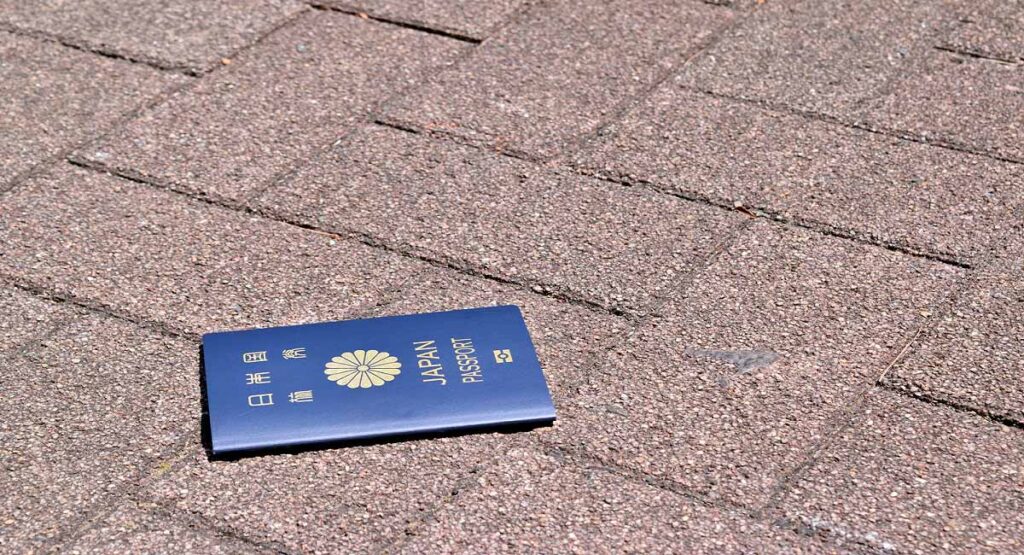
Many people say that Japan is one of the safest countries in the world, especially when we compare it to the rest of the world. Indeed, you might have heard people saying, “If you drop or lose your wallet in Japan, it will be returned,” right? Let’s take a look to see why lost items are almost always returned to the owners in Japan.
Abundant police stations (Koban)

In Japan, small neighborhood police stations called Koban ($\text{交番}$), are abundant. As of today, there are about 6,000 Koban stations in Japan with around 48,000 police officers working there. Tokyo eventually became the city with the most Koban stations (97 Koban stations per 100 square kilometers), and Koban is the first port of call when people lose or find something. In addition to this, Japanese people are taught at a young age to always hand in a lost or forgotten item to the nearest Koban stations. These are the reasons why Koban stations play an important role in solving lost and found cases.
Low crime rate in Japan

The low crime rate in Japan is also the reason why lost items are almost always returned to the owners. The low crime rate gives police officers more time and opportunities to take care of the lost and found items returned to the Koban stations. The lost and found items include wallets, bags, cell phones, plastic umbrellas, and other personal belongings. There are around 26 million lost and found items returned to the nearest police station every year, and most items are returned to the owners.
Japanese people’s beliefs of Otentosama

In Shintoism, everything, from rocks to trees, possesses a spirit. There is also the Otentosama teaching, where Otentosama means the sun. Japanese people are taught at a young age to always be honest and do good things only by their parents using the sentence below:
“誰も見ていないと思って悪いことをしても、おてんとうさまが見ているよ!”
Read as “dare mo miteinai to omotte warui koto wo shitemo, Otentosama ga miteiruyo!” (Japanese parents told their kids that even though no one is seeing them doing bad things, the sun knows and witnesses everything they do, so it’s better to not do anything bad).
Learning this early, Japanese people are usually afraid of doing bad things, and this is also the reason why Japanese people always return lost items to the nearest Koban stations.
Collectivism = high level of solidarity

Japanese people share collectivistic traits; prioritizing others and engaging in behaviors that benefit the group, so in general, Japanese people are very selfless. When Japanese people find a lost item, they usually will hand it in right away to the nearest Koban station because they think the owner is in trouble or needs the item.
Japan’s lost goods law

Japan’s Lost Goods Law obligates people who find lost items to return them quickly to the owner or submit them to the nearest police station (Koban). The law also obligates the owner to reward the finder no less than 5% and no more than 20% of the returned property’s value. The law also mentions that the finder will become the new owner of the lost items if the owner is not found in three months, but this law doesn’t apply for items such as mobile phones, driver’s licenses, and other items with personal information.
Even though there is a law regulating the lost goods in Japan, most Japanese people don’t know about the rules for the reward, so in most cases, most people don’t ask for rewards since they return them on goodwill.
Isn’t it amazing?